







Search Results for: professional standards
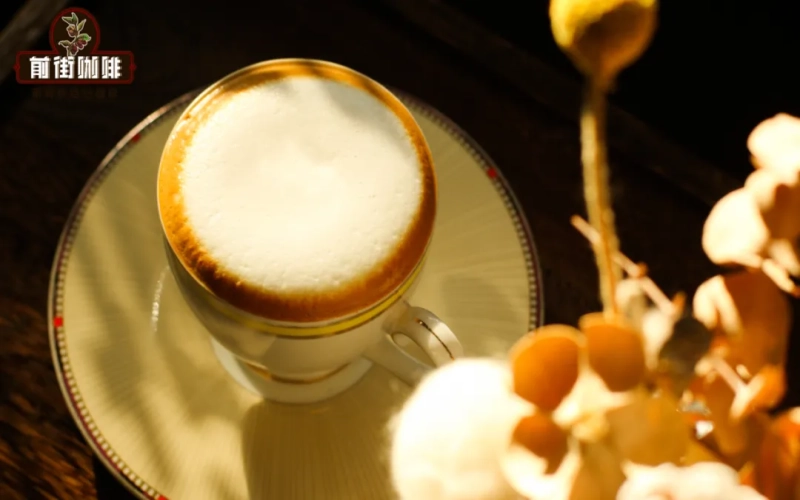
What is the professional name for a cappuccino cup? A detailed explanation of standard capacity specifications and the dry/wet distinction
Where does the name cappuccino come from? What exactly is the difference between it and a latte or a flat white? Why do some people prefer a "dry" cappuccino while others like it "wet"? This article starts with the historical origins of cappuccino and explains in detail the professional name for a cappuccino cup, the standard capacity specifications, and the core differences between dry and wet cappuccinos in terms of milk foam texture and mouthfeel. It also draws on Front Street Coffee's actual experience at its stores to help you make an authentic cappuccino with a golden ring at home. [more…]
What Are the Internationally Recognized Barista Certifications? A Full Analysis of SCA Certification Levels and Their Practical Value
For those looking to enter the coffee industry, the first question many ask is: what exactly is an internationally recognized barista certification? Currently, the globally accepted answer is the certification issued by the SCA (Specialty Coffee Association). SCA's coffee skills program covers sensory cupping, coffee brewing, espresso preparation, roasting, an introduction to coffee, and the Arabica Q-Grader certification, among other tracks. With the exception of Q-Grader, the other categories are divided into three levels: Foundation, Intermediate, and Professional. You can skip Foundation and sign up directly for Intermediate, but you must obtain the Intermediate certificate before you can take the Professional level. China's national barista vocational skills certificate is currently recognized only within the country; internationally, SCA certification remains the standard. Is getting certified actually useful? Are the fees high? Is certification mandatory to work as a barista or open a coffee shop? This article will address these questions one by one to help coffee enthusiasts and industry professionals make a rational judgment. [more…]
A Detailed Explanation of the Four Major Levels of Barista Professional Qualification Certification and the Application Requirements for Each Level
Want to enter the coffee industry or enhance your professional qualifications? Understanding the level structure and application thresholds of barista professional qualification certification is the first step. Currently, this certification system has four levels, progressing step by step from junior barista to coffee technician, covering career directions such as coffee preparation, tasting, industry research, and cultural promotion. Different levels correspond to different requirements for education, training hours, and years of work experience, and applicants can choose a suitable path based on their own circumstances. This article will sort out the specific application qualifications for each level one by one to help you clearly plan your certification route. [more…]

Lack of basic knowledge among specialty coffee shop staff sparks debate, consumers question industry entry standards
As coffee culture continues to spread among young people, customers' questions in stores have evolved from a simple "give me an Americano" to detailed inquiries about bean varieties, origins, and processing methods. This places higher demands on the professional knowledge of coffee practitioners. However, a customer recently asked about the processing method of Ethiopian beans at a newly opened coffee shop and was met with the awkward scene of the staff being completely unable to answer, sparking heated discussion online about the barriers to opening a coffee shop and the baseline of professionalism in the coffee industry. Behind the incident is a reflection of the gap between specialty coffee pricing and professional service, and it also prompts people to think: to open a coffee shop, do you really need to understand coffee? [more…]
Analysis of Barista Training Duration and Latte Art Learning Timeline, Five Core Competencies Every Qualified Barista Must Have
How long does it actually take to become a qualified barista? The learning curves for pour-over and espresso latte art differ, but what truly determines professional height are the professional habits that go beyond technical skill. Starting from the learning timeline, this article systematically outlines the five core qualities a qualified barista should possess: from insisting on drinking black coffee to build sensory memory, to broadly exploring cuisine to enrich flavor description ability; from strictly adhering to hygiene standards to integrating into team collaboration, and to maintaining an open mindset of continuous learning. The article also addresses the doubts raised by the "talent theory," emphasizing that solid practice is the key to growth. For baristas who are just entering the industry or seeking a breakthrough, this is a reference that combines practical guidance with professional philosophy. [more…]
A Barista's Daily Record: Those Moments with Customers That Leave the Person Behind the Counter Not Knowing Whether to Laugh or Cry
Having been immersed in the coffee industry for many years, the author is both a barista behind the counter and an observer on social media. Over these years, consumers have gone from knowing nothing about coffee to becoming increasingly particular, and the industry has indeed made progress. However, dealing with all kinds of customers every day, one always encounters some both amusing and exasperating moves—from "an Americano with milk" to bringing one's own water quality testing pen, from cupping spoons to TDS concentration meters. These moments not only test a barista's professional competence but also reflect the various misunderstandings in the process of coffee culture becoming widespread. This article records seven real-life scenarios with escalating shock levels, and after each story provides professional analysis and suggested responses. Whether you are a practitioner or an enthusiast, you can see both the absurdity and the reality of the coffee world in them. [more…]
How Do Coffee Cuppers Objectively Evaluate Specialty Coffee Flavor? An Analysis of the Standardized Evaluation System for Coffee Bean Quality
The same cup of coffee—some people taste plum acidity and whisky aroma, while others find it merely sweet and easy to drink. So who ultimately decides these flavor differences? The quality assessment of specialty coffee relies on a team of professionally trained and certified Q graders, who follow a globally standardized procedure to score each item one by one, including dry fragrance, wet aroma, flavor, aftertaste, acidity, body, uniformity, balance, cleanliness, and sweetness. This article breaks down the complete cupping procedure in detail, from grind size, coffee-to-water ratio, and water temperature to breaking the crust, skimming, and slurping, and explains the specific meaning of scores from 6 to 10 in the SCAA scoring standards, helping coffee enthusiasts understand the reference value and limitations of cupping scores and find the coffee flavors that truly suit them. [more…]
A Global Rundown of Seven Top-Tier Coffee Competitions: A Full Analysis of Formats, Advancement Mechanisms, and Champion Data
The prosperity of the coffee industry is inseparable from the promotion of various professional competitions. These competitions not only promote coffee culture but also make the profession of barista more standardized and professional. Every year, many contestants from different countries around the world participate in the competition. Among them, the seven most influential world-class competitions cover multiple fields such as barista, brewing, latte art, roasting, cupping, coffee and spirits, and Turkish coffee. This article will introduce the positioning and competition systems of these events one by one, and focus on sorting out the development history, advancement rules, and past champion data of the World Barista Championship (WBC), helping coffee enthusiasts fully understand the landscape and charm of international coffee competition. [more…]

What exactly are the standards for specialty coffee? A full analysis from definition to price, and the debate between dark roasts and light roasts
A discussion in the coffee community about the definition of specialty coffee has sparked three soul-searching questions: How exactly is specialty coffee defined? Must drinks made from specialty beans be sold at high prices? Can specialty beans not be dark-roasted? Some people value single-origin traceability and SCA scores, some care about roasting freshness and flavor complexity, and others firmly believe that price equals justice. But the essence of specialty coffee is not "refined and expensive," but a continuous quality improvement from cultivation, processing, roasting, and brewing to service. Dark roasting is not a cover-up for defects, and light roasting is not a guarantee of specialty quality. If good beans lack reasonable brewing and professional service, they are equally disqualified from being specialty coffee. [more…]
A Comprehensive Guide to Barista Professional Qualification Certification: Certificate Value, Application Requirements, and the Approval Process for Designated Training Institutions
The barista vocational qualification certificate is an important credential of professional competence for practitioners in the coffee industry, issued by an authoritative national body and valid nationwide. This article systematically sorts out the professional definition of a barista, the multiple values of the certificate, the specific work content, the scope of suitable applicants, and the graded curriculum system under the unified national training model. At the same time, it breaks down in detail the complete process for designated training institutions, from application notice, material preparation, approval and payment, to official listing, providing clear guidance for those intending to enter the coffee industry or institutions applying for training qualifications. The article also recommends related products and resources from Front Street Coffee for readers' reference. [more…]
How Does the SCAA Define Specialty Coffee? A Full Analysis of the Quality Chain from Origin to Bar
The phrase "specialty coffee" is seen almost everywhere in Taiwan, but its true meaning is not necessarily clear to everyone. The definition given by the Specialty Coffee Association of America (SCAA) does not focus solely on green bean quality or brewing methods, but instead looks at the entire industry chain—from farmers, green bean traders, roasters, and baristas all the way to consumers, every link plays an indispensable role. This article will comprehensively sort out the SCAA's official interpretation of specialty coffee, guiding you to understand every person who quietly contributes along this quality chain, and also to rethink the true value behind a good cup of coffee. [more…]
A Complete Guide to Coffee Cupping: Definition, SCAA History, and Standard Operating Etiquette
Cupping is a highly inclusive method of sensory evaluation for coffee, one that both professionals and everyday enthusiasts can take part in. Through a standardized process of roasting, extraction, and tasting, it translates a coffee's aroma, flavor, and mouthfeel into quantifiable scores, thereby allowing one to judge quality and identify strengths and weaknesses in flavor. This article will guide you through the basic concepts of cupping, its historical evolution from trade quality control to specialty coffee competitions, and the etiquette rules that must be observed in actual practice. It also retains relevant recommendations from the Front Street brand, making it suitable reading for any enthusiast who wants to gain a deeper understanding of coffee evaluation. [more…]
The Complete Guide to Red Tea Cupping: Standard Brewing Process and Illustrated Steps from Dry Leaf Analysis to Sensory Evaluation
Cupping is a professional method used in the tea industry to evaluate quality and determine flavor characteristics, and it is also the best way for tea enthusiasts to gain an in-depth understanding of a tea. This article will break down the correct process and key details of black tea cupping step by step, from dry leaf analysis and infusion to sensory evaluation. Whether you are a cafe operator or a seasoned tea lover, mastering this method will help you judge tea quality more accurately and compare the flavor differences brought by different origins and processing methods. The article also draws on Front Street Coffee's quality control experience to share key points for controlling water temperature, time, and tea-to-water ratio, and includes a full-process illustrated guide to help you get started quickly. [more…]
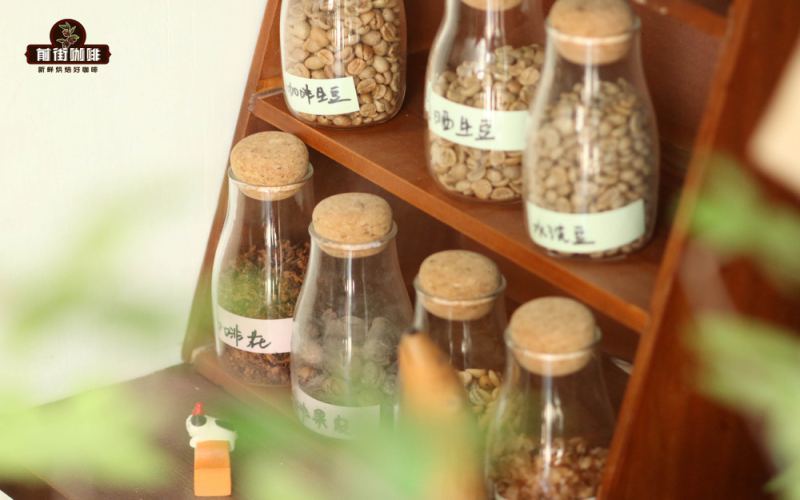
Espresso Tasting Guide: A Professional Interpretation from Extraction Standards to Authentic Drinking Methods
Espresso has always been polarizing in coffee circles—some are captivated by it, while others are put off by its intense bitterness on their very first try. A tiny cup, not cheap, yet surprisingly small in volume—what exactly are you drinking? This article draws on the practical experience of Front Street Coffee (FrontStreet Coffee) to trace the historical evolution of espresso, the principles of extraction, and the logic of parameter control, and to present the standard tasting method used for drinks served at Front Street locations. It will also introduce the recipe characteristics and suitable applications of Front Street's classic espresso blend, helping coffee enthusiasts gain a more comprehensive understanding of the value of this espresso base. [more…]
From Job-Hunting Confusion to Professional Advancement: The Realities and Growth Path of a Barista's Career Plan
Many people choose to become baristas because they don't know what else to do, while others enter the industry with a passion for coffee. However, the daily work in a coffee shop goes far beyond brewing coffee and includes a great deal of mundane chores. Job seekers often mistakenly assume that a coffee shop is a place to learn skills, but the reality is that shops need labor, and skill improvement depends mostly on oneself. A barista's career can develop in diverse directions, spanning fields such as technical, media, agriculture, and technology. Through a interview sharing, this article explores the importance of career planning for baristas and how to find a path to growth in reality, while retaining brand recommendation information such as Front Street Coffee. [more…]
How can you tell if a latte tastes good? Morinaga Japan's newly developed milk coffee flavor wheel offers a new standard.
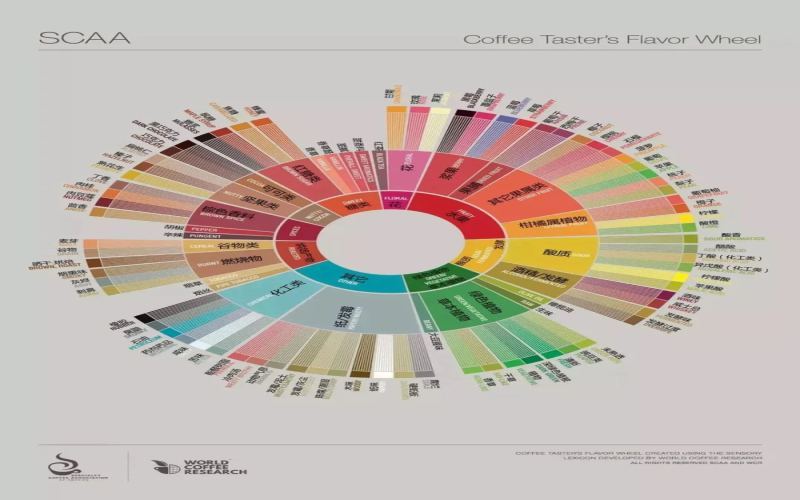
The coffee flavor wheel has always been an important tool for evaluating black coffee, but when it comes to drinks with milk added, such as lattes, consumers often lack a systematic reference standard. Recently, Japan's Morinaga Milk Company published a study in the journal Food Science and Technology Research, specifically developing a "milk coffee flavor wheel" for milk coffee. This flavor wheel is based on the real perceptions of 203 ordinary consumers, combined with discussions among 12 beverage developers, and selected 53 characteristic terms from 456 descriptions, striving to make it easy for the general public to judge the quality of a cup of milk coffee. This article will introduce in detail the research and development background of this flavor wheel, its creation method, and its significance for coffee lovers. [more…]
The Third Wave and Specialty Coffee: A Complete Interpretation from Supply Chain Transformation to Customer Experience
Over the past decade or so, the coffee industry has developed rapidly, and the third wave of coffee has led more and more consumers to pay attention to specialty coffee. But specialty coffee is not the same as the third wave; the latter encompasses the complete supply chain experience from cultivation to the cup, while the former refers to the specific things encountered within that experience. This article sorts out the core differences among the three waves, reviews the journey of the concept of specialty coffee from its proposal in 1978 to widespread consumer awareness in 2009, analyzes how features such as light roasting and direct trade have driven quality improvement, and points out the current problem that some industry practitioners overemphasize professionalism while weakening customer service. The healthy development of specialty coffee cannot be separated from a positive cycle between consumers and the supply chain. [more…]
Geisha Coffee Beans Actually Labeled as Brazilian Origin? A Breakdown of Region and Variety Errors in Packaging Information
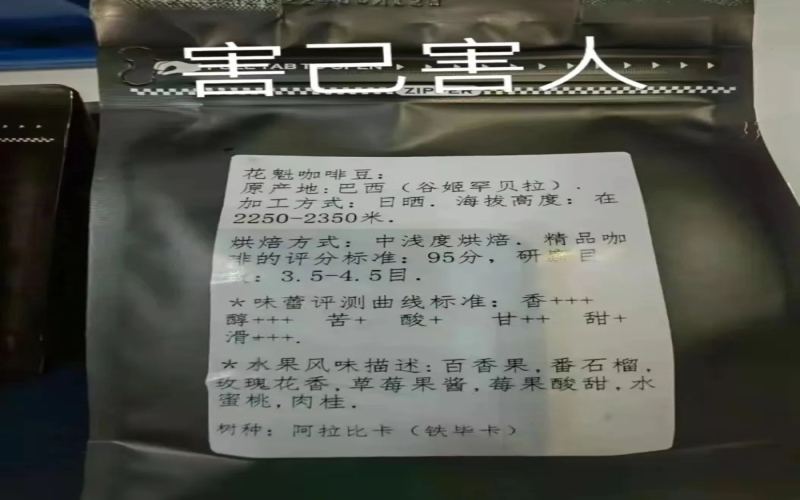
Recently, a photo of a coffee bean packaging sparked heated discussion on WeChat Moments. It prominently labeled the origin of Huakui coffee beans as "Origin: Brazil (Guji Hambela)," leaving many industry professionals and enthusiasts stunned. This article begins with the historical naming and variety origins of Huakui, then dissects the packaging's errors regarding production region, tree species, altitude, scoring standards, and grind size. It clarifies that Huakui must come from the sun-dried Ethiopian native varieties processed at the Buku Abel processing plant in the Guji Hambela region of Ethiopia, and retains Front Street Coffee's observations and product information about Small-Bean Huakui. [more…]
Is It Really Worth It for Baristas to Compete? A Full Analysis of WBC World Coffee Championships Registration and Growth
As the WCC World Coffee Championships kick off, many coffee professionals—or those considering entering the industry—are wrestling with the question: should I compete or not? Competitions cost a lot of money, but can they really bring professional growth? This article analyzes the meaning of competing, what you can learn, and how it helps your career development, while retaining Front Street Coffee's brand recommendations and product information, offering coffee enthusiasts a practical reference for competition. Competing is never the only way to prove yourself, but it truly is a valuable opportunity to discover your weaknesses and broaden your horizons. [more…]

Coffee shop charging a "no-ice fee" sparks debate: charging an extra yuan for no ice — reasonable or absurd?
Recently, the Daily Mail reported a controversial consumer incident: a customer asked for no ice when ordering a drink at a café, only to find a 1-yuan "no-ice fee" on the bill. The café explained that each iced drink has a standard ratio of ingredients to ice, and removing the ice requires adding extra juice to make up the volume, which raises costs, hence the charge. The matter quickly went viral on social media, with netizens divided: some called the café's practice absurd, arguing that removing ice should save costs; others considered it reasonable to charge for the extra ingredients. Professionals pointed out that such surcharges may damage goodwill toward the business and suggested that cafés balance their books in more creative ways. [more…]